Healthy food. Simple recipes. A plan you can actually follow.
If you’ve ever started a diet on Monday only to give up by Friday, you’re not alone.
The problem is often not a lack of motivation. It’s an unrealistic plan.
A good weight-loss meal plan should give you enough variety to enjoy your food, enough protein and fiber to help you feel satisfied, and enough flexibility to fit around real life.
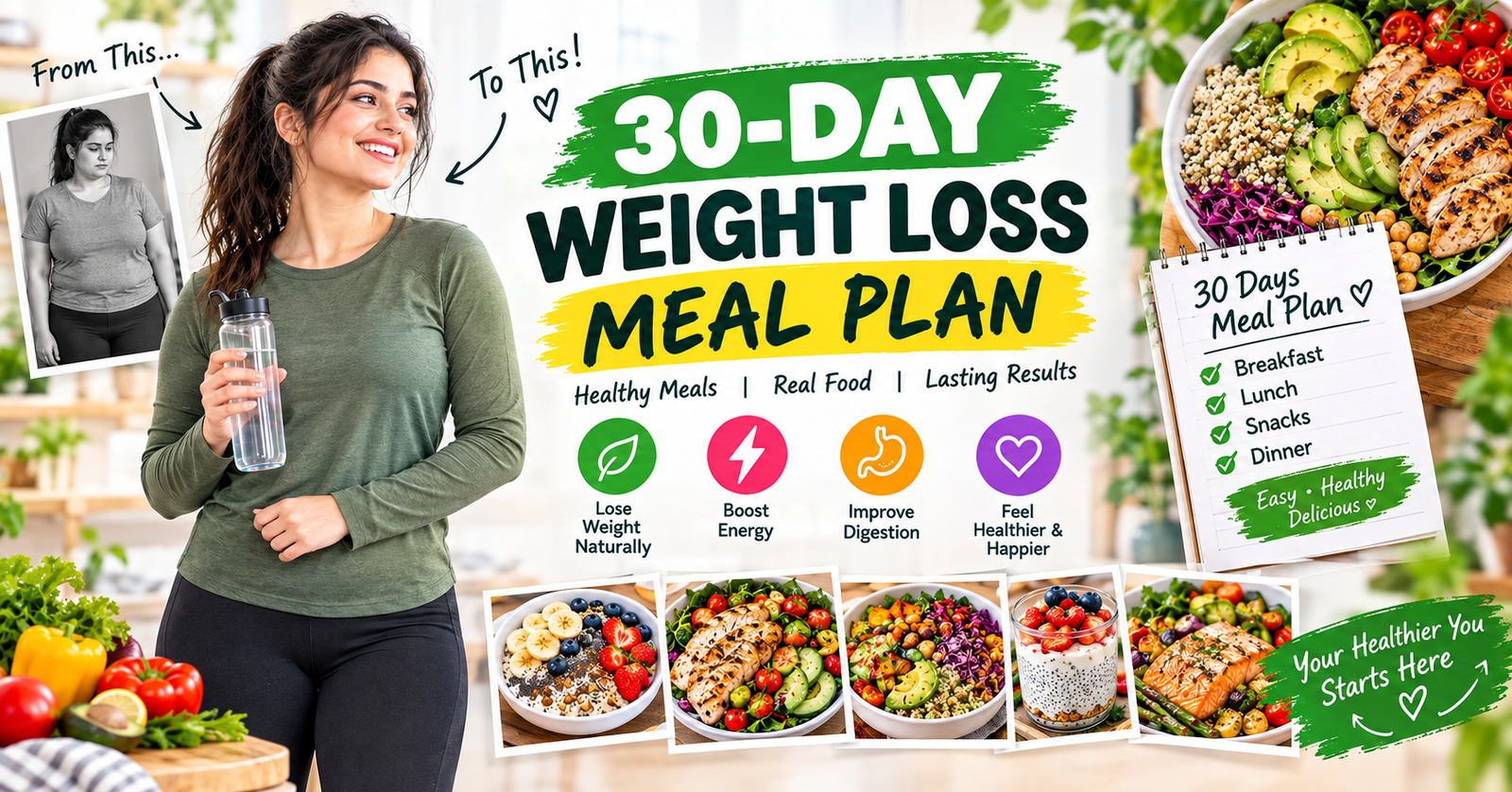
This 30-Day Weight Loss Meal Plan is designed as a practical starting point for adults who want to improve their eating habits and manage their weight.
You’ll find:
- Breakfast ideas
- Lunch ideas
- Dinner ideas
- Healthy snacks
- Portion guidance
- A grocery list
- Meal-prep tips
- Restaurant and takeaway strategies
- A simple 30-day schedule
Important: Weight loss is different for everyone. This plan does not guarantee a specific amount of weight loss or promise that someone will lose 30 kg. If you have a medical condition, take medication, are pregnant or breastfeeding, or have a significant amount of weight to lose, speak with a qualified healthcare professional before making major dietary changes.
How This Meal Plan Works
Rather than telling you to eat as little as possible, this plan focuses on building balanced meals.
A simple meal usually includes:
Protein
Chicken, fish, eggs, Greek yogurt, beans, lentils, tofu or lean meat.
Vegetables
Broccoli, spinach, carrots, peppers, tomatoes, cucumber, green beans and leafy greens.
High-Fiber Carbohydrates
Oats, potatoes, sweet potatoes, brown rice, quinoa and whole-grain bread.
Healthy Fats
Avocado, olive oil, nuts and seeds.
You don’t need to remove carbohydrates completely.
You don’t need to skip every food you love.
And you don’t need to eat the same salad every day.
The goal is to create meals that are nutritious, satisfying and realistic.
Your 30-Day Plan
The following menu gives you a simple structure for the month.
You can swap meals between days according to your preferences and repeat your favorite recipes.
WEEK 1 — Build Your Foundation
Day 1
Breakfast:
2 eggs with spinach and tomatoes, whole-grain toast and berries.
Lunch:
Grilled chicken salad with lettuce, cucumber, tomatoes, peppers and carrots.
Snack:
Greek yogurt with berries.
Dinner:
Baked salmon, broccoli, carrots and a small baked potato.
Day 2
Breakfast:
Oatmeal with banana, berries, cinnamon and a small amount of nuts.
Lunch:
Whole-grain chicken wrap with lettuce, cucumber, tomato and yogurt dressing.
Snack:
Apple with a small serving of peanut butter.
Dinner:
Lean beef and vegetable stir-fry with brown rice.
Day 3
Breakfast:
Greek yogurt, oats, berries and chia seeds.
Lunch:
Homemade lentil and vegetable soup with whole-grain toast.
Snack:
Carrots and cucumber with hummus.
Dinner:
Grilled chicken, roasted sweet potato, green beans and salad.
Day 4
Breakfast:
Vegetable omelet with whole-grain toast and fruit.
Lunch:
Tuna and bean salad with tomatoes, cucumber and leafy greens.
Snack:
An orange and a small handful of nuts.
Dinner:
Homemade turkey and bean chili with vegetables.
Day 5
Breakfast:
Overnight oats with Greek yogurt, berries and cinnamon.
Lunch:
Chicken and brown rice bowl with mixed vegetables.
Snack:
Plain yogurt and fruit.
Dinner:
Baked white fish, roasted vegetables and potatoes.
Day 6
Breakfast:
Scrambled eggs with mushrooms and tomatoes, plus whole-grain toast.
Lunch:
Chickpea salad with cucumber, tomatoes, peppers and leafy greens.
Snack:
Fresh fruit and nuts.
Dinner:
Homemade chicken and vegetable soup with a side salad.
Day 7
Breakfast:
Banana oatmeal with cinnamon and nuts.
Lunch:
Grilled chicken or salmon salad with mixed vegetables.
Snack:
Greek yogurt with berries.
Dinner:
Bean and vegetable curry with a moderate portion of basmati rice.
WEEK 2 — Add More Variety
During week two, keep the same balanced structure but change your ingredients.
Breakfast Options
Choose one each day:
- Eggs + whole-grain toast + fruit
- Greek yogurt + berries + oats
- Overnight oats + banana
- Vegetable omelet
- Oatmeal + apple + cinnamon
- Avocado and egg toast
- Yogurt and fruit bowl
Lunch Options
- Chicken salad
- Tuna whole-grain wrap
- Lentil soup
- Chickpea bowl
- Turkey and vegetable sandwich
- Chicken rice bowl
- Bean salad
Dinner Options
- Salmon + broccoli + potatoes
- Chicken stir-fry + brown rice
- Turkey chili
- Baked fish + vegetables
- Chicken + sweet potato
- Lentil curry + vegetables
- Homemade chicken soup
WEEK 3 — Make Your Meals More Satisfying
By the third week, focus on protein and fiber.
For example:
Instead of eating toast alone, add eggs.
Instead of having fruit alone, pair it with Greek yogurt.
Instead of having a large bowl of plain rice, combine a moderate portion with chicken and plenty of vegetables.
This approach can make meals more balanced and satisfying.
Easy Protein Choices
- Eggs
- Chicken
- Turkey
- Salmon
- Tuna
- White fish
- Greek yogurt
- Cottage cheese
- Beans
- Lentils
- Chickpeas
- Tofu
Easy High-Fiber Foods
- Oats
- Beans
- Lentils
- Chickpeas
- Vegetables
- Berries
- Apples
- Pears
- Potatoes
- Whole grains
WEEK 4 — Turn the Plan Into a Lifestyle
The final week isn’t about becoming stricter.
It’s about learning how to make good choices without needing a rigid menu forever.
Before eating, ask yourself:
Where is my protein?
Where are my vegetables?
Is my portion appropriate for me?
Am I actually hungry?
Could I choose water instead of a sugary drink?
These simple questions can help you make better choices even when you’re traveling, eating at work or going out with friends.
The Healthy Plate Method
One of the easiest ways to build a balanced meal is to think about your plate.
½ Plate — Vegetables
Examples:
- Broccoli
- Spinach
- Salad
- Carrots
- Peppers
- Green beans
- Cauliflower
¼ Plate — Protein
Examples:
- Chicken
- Fish
- Eggs
- Lean meat
- Beans
- Lentils
- Tofu
¼ Plate — Carbohydrates
Examples:
- Brown rice
- Basmati rice
- Potatoes
- Sweet potatoes
- Quinoa
- Whole-grain pasta
Then add a moderate amount of healthy fat.
This is a useful visual guide, but your individual nutritional needs may require different portions.
Healthy Snacks
You don’t have to be afraid of snacks.
Choose snacks that provide useful nutrients and keep portions reasonable.
Try:
- Greek yogurt + berries
- Apple + peanut butter
- Boiled egg + fruit
- Carrots + hummus
- Cottage cheese + fruit
- Small handful of nuts
- Whole-grain toast + avocado
- Air-popped popcorn
If you’re not hungry, you don’t need to snack simply because the clock says it’s snack time.
What Should You Drink?
Make water your main everyday drink.
Other options include:
- Sparkling water
- Unsweetened tea
- Unsweetened coffee
- Water with lemon
- Water with cucumber or mint
Try to reduce sugary drinks such as regular soda, sweetened iced tea and heavily sweetened coffee drinks.
Liquid calories can add up quickly.
What Foods Should You Limit?
You don’t need a giant list of forbidden foods.
Instead, try to limit foods that are easy to overeat or provide lots of calories with relatively little nutritional value.
These may include:
- Sugary drinks
- Candy
- Cakes and pastries
- Deep-fried foods
- Highly processed snacks
- Large portions of fast food
- Frequent desserts
- Excessive alcohol
The key word is limit, not necessarily eliminate.
A sustainable eating plan should leave room for real life.
Can You Eat Rice, Bread and Potatoes?
Yes.
Carbohydrates are not automatically “bad.”
Rice, bread and potatoes can all fit into a balanced eating pattern.
The important factors include:
- Portion size
- Cooking method
- What you eat with them
- Your overall diet
For example, a meal containing a moderate portion of rice, grilled chicken and plenty of vegetables is very different from eating a very large portion of fried rice with a sugary drink.
How to Meal Prep Like a Pro
You don’t need to spend your entire Sunday cooking.
Try preparing a few basics:
Prepare Your Protein
Cook several portions of chicken, turkey or another protein source.
Prepare Vegetables
Wash and chop vegetables so they’re ready to cook or eat.
Prepare Carbohydrates
Cook a batch of rice, quinoa or potatoes.
Prepare Easy Snacks
Keep fruit, yogurt, boiled eggs and other convenient options available.
Then you can build meals in minutes.
Meal prep isn’t about eating the same thing every day. It’s about making healthy choices easier.
Your Healthy Grocery List
Protein
☐ Chicken
☐ Eggs
☐ Salmon
☐ Tuna
☐ Turkey
☐ Lean meat
☐ Greek yogurt
☐ Cottage cheese
☐ Beans
☐ Lentils
☐ Chickpeas
Vegetables
☐ Broccoli
☐ Spinach
☐ Carrots
☐ Tomatoes
☐ Cucumber
☐ Bell peppers
☐ Mushrooms
☐ Green beans
☐ Salad greens
☐ Cauliflower
Fruit
☐ Apples
☐ Bananas
☐ Berries
☐ Oranges
☐ Pears
☐ Melon
Carbohydrates
☐ Oats
☐ Brown rice
☐ Basmati rice
☐ Potatoes
☐ Sweet potatoes
☐ Quinoa
☐ Whole-grain bread
☐ Whole-wheat pasta
Healthy Fats
☐ Avocado
☐ Olive oil
☐ Almonds
☐ Walnuts
☐ Chia seeds
☐ Natural peanut butter
What About Eating Out?
You don’t have to stop going to restaurants.
Use a few simple strategies.
At a Restaurant
Look for meals that include:
Protein + vegetables + a sensible carbohydrate portion.
Choose grilled, baked, roasted or steamed options more often than heavily fried foods.
At a Fast-Food Restaurant
You can still make a more balanced choice by considering:
- Smaller portions
- Grilled options where available
- Water or unsweetened drinks
- A side salad or vegetables where available
- Less creamy or sugary sauces
You don’t need to be perfect.
What About Cravings?
Cravings are normal.
Instead of thinking:
“I can never eat chocolate again.”
Try:
“I can enjoy a sensible portion and continue with my normal meals.”
This mindset can make healthy eating feel much more sustainable.
If you want something sweet, try fruit and yogurt, berries, or a small portion of your favorite dessert.
Exercise and Weight Management
Nutrition is important, but regular physical activity also supports overall health.
Choose activities you enjoy:
- Walking
- Cycling
- Swimming
- Dancing
- Hiking
- Strength training
- Home workouts
If you’re currently inactive, start gradually rather than trying to do too much at once.
Sleep, Stress and Your Eating Habits
Healthy eating doesn’t happen in isolation.
Busy schedules, stress and poor sleep can make healthy choices more difficult.
Try to create a routine that includes:
- Consistent sleep
- Regular meals
- Physical activity
- Time to relax
- Meal preparation
- Adequate hydration
Think of weight management as a long-term lifestyle, not a 30-day punishment.
Can This Plan Help You Lose 30 kg?
If you’ve set a goal of losing 30 kg, it’s important to understand that the same diet will not produce the same result for everyone.
A 30 kg weight-loss goal is substantial.
The appropriate pace and strategy depend on your individual circumstances, including your starting weight, health, activity level, medications and nutritional needs.
Rather than chasing rapid weight loss, focus on habits that you can maintain.
If you need to lose a significant amount of weight, consider speaking with a doctor or registered dietitian who can help you create an individualized plan.
30-Day Healthy Habit Checklist
Save this section and check it off each day.
Every Day
☐ Drink water regularly
☐ Include protein with your main meals
☐ Eat vegetables and/or fruit
☐ Choose mostly minimally processed foods
☐ Pay attention to portions
☐ Move your body
☐ Eat mindfully
☐ Get adequate sleep
Every Week
☐ Plan your meals
☐ Make a grocery list
☐ Prepare a few healthy ingredients
☐ Try one new healthy recipe
☐ Review what worked well
The Bottom Line
You don’t need a perfect diet.
You need a plan that makes healthy choices easier to repeat.
Start with breakfast.
Make lunch balanced.
Build a satisfying dinner.
Choose smarter snacks.
Drink more water.
Move regularly.
And when you have an indulgent meal, don’t give up.
Your next meal is always another opportunity to get back on track.
Healthy eating isn’t about being perfect for 30 days.
It’s about learning how to eat well for the long term.
Ready for more delicious ideas?
Explore our collection of healthy recipes, easy meal ideas and nutritious dishes and find meals you actually want to make again.
Frequently Asked Questions
How many meals should I eat per day?
There isn’t one meal schedule that works for everyone. Some people prefer three meals, while others include snacks. Choose a routine that helps you meet your nutritional needs without leaving you excessively hungry.
Is this meal plan suitable for everyone?
No single meal plan is suitable for everyone. Individual needs vary according to age, body size, activity, health and other factors.
Can I repeat meals?
Absolutely. Repeating meals can make shopping and meal preparation easier. You can also swap ingredients to add variety.
Do I have to count calories?
Not necessarily. Portion awareness and balanced meals can be useful approaches, although some people may benefit from calorie tracking.
Can I have dessert?
Yes. An occasional dessert can fit into an overall balanced eating pattern. Focus on your overall habits rather than one food.
What is the most important part of a weight-loss diet?
Consistency is important. Choose nutritious foods, appropriate portions and habits that you can realistically maintain over time.
How quickly will I lose weight?
There is no universal timeline. Weight change varies considerably between individuals, and rapid-loss promises should be treated cautiously.
Start With One Meal
You don’t need to change everything today.
Pick one breakfast from this plan.
Then choose tomorrow’s lunch.
Then prepare one healthy dinner.
Small decisions repeated consistently can create meaningful changes over time.
Your healthy eating journey can start with your very next meal.